How to Choose the Right Gear Motor for Ice Auger Applications
Jul 23, 2026
Toosyn

Fig. 1 — Electric ice auger in a cold-weather field environment
Electric ice augers operate in one of the harshest duty environments a small DC motor can face: sub-zero starting temperatures, sudden shock loads when the blade bites into ice, and long periods of intermittent, high-torque operation. A motor that performs well in a lab test can still stall, overheat, or fail prematurely once it's installed in a finished auger and shipped to a customer in a cold-climate market.
This guide is written for procurement and engineering teams who are specifying or re-sourcing a gear motor for an ice auger product line — whether you're designing a new model, qualifying a second supplier, or troubleshooting field failures. It covers the parameters that actually matter, the mistakes we see most often in RFQs, and where Toosyn's planetary gear motor series fit into typical ice auger torque requirements.
What Makes Ice Auger Applications Different
Before comparing motor specs, it's worth being precise about the operating profile, because it's this profile — not the drill bit or housing design — that drives the motor selection.
Cold-start torque demand
Grease and lubricant inside a gearbox thicken as temperature drops, which increases the torque required simply to get the motor turning. A motor sized only against room-temperature test data can underperform, or fail to start at all, in field conditions well below freezing.
Shock loading on contact
When the blade engages ice, torque demand spikes almost instantly. This is a stall-risk moment, not a steady-state one — and it's the single most common point of motor failure in this application.
Water, slush, and ice-particle ingress
Meltwater and ice fragments around the drive shaft and housing make sealing and ingress protection a functional requirement, not an added-cost option.
Runtime on battery power
Most electric ice augers are battery-driven. Motor efficiency has a direct, measurable effect on runtime per charge, which is frequently a spec called out by the end brand.
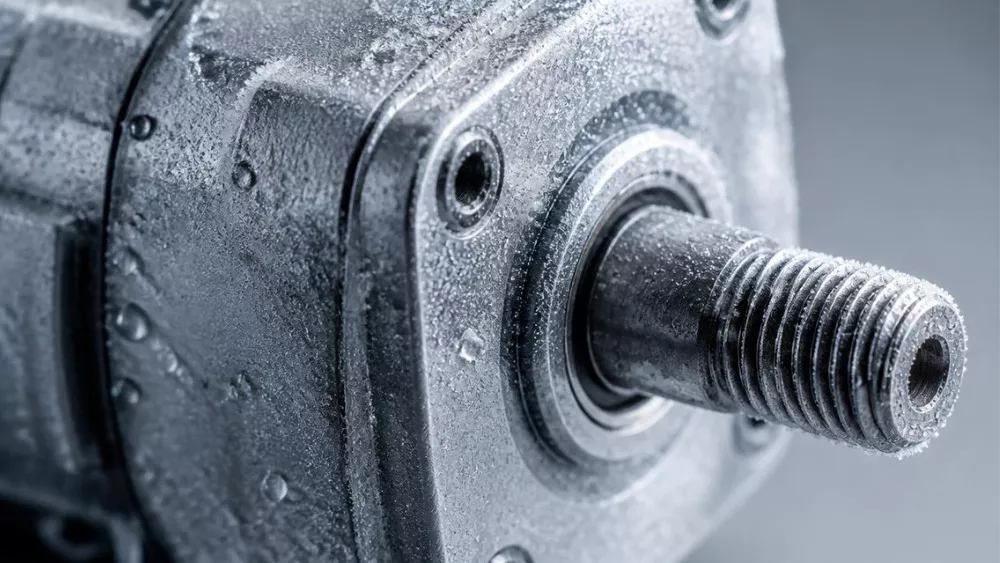
Fig. 2 — Cold-weather exposure at the motor housing and drive shaft
| Engineering takeaway: An ice auger motor needs to be sized for its stall torque and cold-start behavior, not just its rated running torque. Most premature field failures we're asked to diagnose trace back to this gap. |
Key Parameters to Evaluate
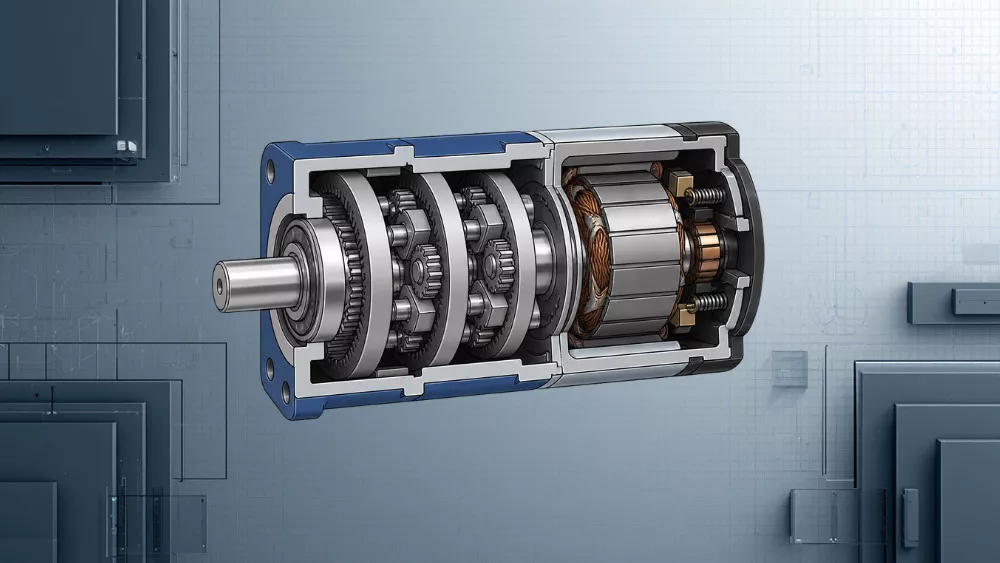
Fig. 3 — Internal structure of a planetary DC gear motor
| Parameter | Why It Matters |
| Rated torque vs. stall torque | Rated torque describes normal running conditions. Stall torque describes what the motor can withstand at the moment of blade impact without burning out. Both figures should be requested and verified against real load data. |
| Operating voltage (12V / 24V) | Must match the battery system used in the finished product. Mismatched voltage is one of the most common late-stage design changes we see. |
| Gear ratio | Ice auger drives prioritize torque over speed. The right reduction ratio converts available motor power into usable cutting torque at the shaft. |
| Ingress protection (IP rating) | We recommend IP54 as a practical minimum for wet, icy environments; higher ratings for fully submersible or marine-adjacent use cases. |
| Overload / stall protection | Determines whether the motor can survive repeated shock loading over its service life, or whether it degrades after the first season. |
| Motor and gearbox dimensions | Housing space in a handheld or two-man auger is limited; diameter and length constraints often narrow the field before torque does. |
Common Mistakes in Ice Auger Motor Selection
| Mistake 1Specifying against rated torque only, and ignoring stall torque. This is the most frequent cause of motors that test fine but fail within the first cold season. |
| Mistake 2Overlooking cold-temperature lubrication. A gearbox greased for general-purpose use can bind or demand excess starting current in sub-zero conditions. |
| Mistake 3Choosing a standard spur-gear motor to save cost, rather than a planetary gear motor, and losing service life and noise performance in the process — a false economy once warranty and return rates are factored in. |
| Mistake 4Not confirming customization options (shaft type, lead wire configuration, connector) with the supplier early, which creates rework at the assembly stage. |
Recommended Toosyn Solutions
For most electric ice auger platforms, Toosyn's mid-to-high torque planetary DC gear motor series cover the operating range described above. All series are available with customization for shaft interface, wiring, and gear ratio to match an existing auger design or a new development program.
|
PG42775 Series — 42mm Planetary DC Gear Motor
Power: 6–40W | Rated torque: 50–200 kg.cm | Compact diameter for handheld and single-blade auger designs
View PG42775 series specifications → |
|
PG45775 Series — 45mm Planetary Gear Motor
Power: 6–40W | Rated torque: 50–200 kg.cm | Larger housing diameter for improved heat dissipation under sustained or commercial-duty use
View PG45775 series specifications → |
For heavier-duty or commercial-grade ice auger platforms requiring higher stall torque margins, Toosyn's 52mm and 56mm series (PG52997 / PG56ZY58) are also available. Our engineering team can recommend the right frame size and gear ratio based on your target blade diameter and battery voltage.
Frequently Asked Questions
What voltage is best for an electric ice auger motor?
12V and 24V are both common, depending on the battery pack used in the finished product. The motor's winding and gear ratio should be matched to the target voltage during the design stage, not adjusted afterward.
Can the motor withstand sub-zero operating temperatures?
Cold-rated performance depends on the lubricant specification and winding design. Toosyn can recommend a cold-weather grease and winding configuration based on your target climate and duty cycle.
Do you support customization for shaft type and wiring configuration?
Yes. Shaft diameter, D-cut or spline interfaces, lead wire length, and connector type can be customized to match an existing assembly or a new design.
What is required to start an evaluation for a new or existing ice auger program?
Our engineering team typically requests target torque, voltage, duty cycle, and available installation space to recommend a suitable series and gear ratio before quoting.
|
Need help specifying torque and gear ratio for an ice auger program? Send us your application requirements and our engineers will recommend a suitable motor configuration.
|
Related Reading
Why Planetary Gear Motors Have Lower Backlash (And Why It Matters for Precision Positioning)
| This article is intended for OEM, manufacturer, and distributor sourcing teams evaluating drive motors for production applications.
0
Comments
Leave a Comment
Your email address will not be published. Required fields are marked *
Name can't be empty
Email error!
Message can't be empty
😍
😜
😳
😌
😄
😘
😝
😒
😃
😚
😚
😛
😟
😧
😀
😉
😓
😱
😤
😣
😂
😥
😩
😠
😢
😭
😰
😨
😡
😆
😪
😅
😐
😇
😋
😴
👿
😕
😏
😷
😵
😟
😮
😯
😑
👧
👴
😧
😬
😾
👶
👱
👵
👸
🙀
👺
👦
👩
👨
😽
😿
🙈
💩
💥
💤
😼
😹
🙉
🔥
✨
💦
👎
✌
👆
👈
💪
💹
👍
👊
💴
💶
💷
💸
👉
💵
🙏
🌎
🏧
👏
💳
👇
💑
🙆
🙅
💁
👫
👭
🙎
🙇
👑
👔
Submit Comment
Most Popular
-
 Aug 21, 2025Which Motor Is Best for Electric Vehicle? A Complete Guide for 2026
 -
 Oct 16, 2025Top 10 DC Motor Manufacturers in China 2026
 -
 Dec 18, 2025The Ultimate Buyer's Guide to High Torque DC Motors
 -
 Apr 11, 2026Top 10 China Gear Motor Manufacturer in 2026


Laster Blogs
-
 Aug 20, 2026Why Planetary Gear Motors Offer Low Backlash for Precision Positioning
 -
 Aug 19, 2026Planetary Gear Ratio Calculation: How to Calculate the Right Gear Ratio for Your Motor
 -
 Aug 18, 2026Planetary Gearbox vs Spur Gearbox: Why Planetary Wins in Compact High-Torque Applications
 -
 Aug 17, 2026What Is a Planetary DC Gear Motor and How Does It Work?


Set A Consultation Today
Name can't be empty
Email error!
Send Your Message
*We respect your confidentiality and all
information are protected.


