How to Choose the Right Planetary Gear Motor for Vending Machines and Smart Lockers
Aug 05, 2026
Toosyn
_1785922277_WNo_1600d900.webp)
Choosing the wrong vending machine motor can create problems that are difficult to solve after production. Slow dispensing, inconsistent movement, excessive operating noise, motor overheating, and premature gearbox wear can increase maintenance costs and reduce customer satisfaction.
Modern vending machines and smart lockers require more than simple rotation. Their actuator systems must deliver reliable torque, precise movement, quiet operation, and thousands of repeatable cycles within a compact installation space.
This guide explains what OEM manufacturers should evaluate when selecting a vending machine motor or smart locker actuator motor, why planetary gear motors are widely used in automated equipment, and how the PG22180 and PG25370 planetary gear motor series provide compact and reliable motion solutions for vending machines and smart lockers.
What Requirements Matter Most for Vending Machine Motors?
When engineers and procurement managers evaluate motors for vending machines or smart lockers, several technical requirements consistently rank as priorities. The table below summarizes the key factors that OEM manufacturers consider during the selection process.
| Requirement | Why It Matters |
|---|---|
| Compact design | Limited internal space in vending cabinets and locker units |
| High torque density | Must drive mechanical loads such as dispensing coils, push rods, and locker doors |
| Low noise | Equipment operates in offices, hotels, malls, and residential areas |
| Long service life | Frequent operation cycles, often dozens to hundreds per day |
| Stable speed | Accurate dispensing and smooth door movement depend on consistent rotation |
| Efficient power consumption | Lower operating cost, especially for 24-hour unmanned equipment |
| Easy integration | Reduces product development time and simplifies assembly |
Each of these factors directly affects equipment performance, user experience, and total cost of ownership. A low noise gear motor compact enough for tight installations, yet powerful enough for repeated actuation, represents the balance that OEM engineers seek.
Why Planetary Gear Motors Are Ideal for Smart Vending Equipment
Among the motor types available for automated retail and locker systems, the planetary gear motor has become the preferred choice for most OEM manufacturers. This is not accidental — the planetary gearbox design addresses several challenges specific to vending machines and smart lockers.
High Torque in a Compact Package
Space inside vending cabinets and smart lockers is always limited. Planetary gearboxes distribute load across multiple gear stages, delivering higher output torque at a smaller form factor compared to spur gear or worm gear alternatives. For the same installation envelope, a compact planetary gearbox typically produces 20–40% more torque than conventional configurations, allowing engineers to reduce the overall size of the actuator assembly or increase the mechanical output without enlarging the housing.
Smooth and Stable Operation
Planetary gear systems engage multiple planet gears simultaneously, which reduces pulsation and backlash compared to single-stage gear sets. This results in smoother rotation, less vibration, and more consistent movement for dispensing mechanisms and door actuators. When a vending machine dispenses a product, the motor must start, rotate precisely, and stop without jarring motion — characteristics that planetary gearboxes handle well by design.
Better Durability for Frequent Cycles
Smart lockers and vending machines operate on high-frequency cycles. A smart parcel locker may cycle its door actuators dozens to hundreds of times per day, accumulating tens of thousands of cycles over a few years. Planetary gearboxes distribute the load across three or more planet gears at each stage, reducing wear on individual teeth. This shared-load architecture extends gear life and maintains consistent torque output over time, making planetary gear motors well-suited for high-cycle applications.
Efficient Transmission
Planetary gear trains achieve efficiency ratings of 90–95% per stage, depending on gear quality and lubrication. Higher transmission efficiency means less energy is lost as heat, which is particularly important for equipment that runs continuously or operates in enclosed spaces with limited cooling. Reduced heat generation also contributes to longer motor life and more stable performance across extended operating periods.
How to Select the Right Torque for Vending Machines and Smart Lockers
Torque selection is one of the most critical decisions when specifying a vending machine actuator or smart locker motor. Too little torque leads to stalling under load; too much results in unnecessary cost, larger size, and higher power consumption.
To determine the right torque, engineers need to evaluate the following variables:
- Product weight: Heavier items require more torque from the dispensing mechanism. A coffee vending machine dispensing cups and pods has different torque requirements than a snack machine handling bags of varying weight.
- Dispensing mechanism type: Coil-based, push-bar, conveyor, and robotic arm mechanisms each impose different loads on the motor. The friction characteristics and mechanical advantage of each system must be factored into the torque calculation.
- Door size and spring resistance: Smart locker doors vary in size and weight. Many designs include return springs or gas struts that add to the load the actuator motor must overcome during both opening and closing cycles.
- Mechanical friction: Bearings, guides, and linkages throughout the actuation chain contribute friction that the motor must overcome. Accurate estimation of total system friction prevents undersizing.
- Cycle frequency: Applications with frequent starts and stops generate more heat. Motors that run at higher duty cycles may need additional torque margin to account for thermal derating.
Since the total load is the sum of all resistive forces, OEM engineers typically calculate the required torque with a safety margin of 20–30% above the theoretical value. This margin accounts for variations in manufacturing, temperature effects, and long-term wear. When evaluating a high torque small gear motor for a specific application, it is important to verify the torque rating at the actual operating speed rather than at stall, as the torque-speed curve of a DC motor drops as speed increases.
Why Low Noise Matters in Self-Service Equipment
Noise performance directly affects the user experience of self-service equipment. Vending machines and smart lockers are installed in environments where quiet operation is expected: offices, hotels, shopping malls, residential apartment lobbies, hospitals, and schools. A low noise gear motor compact enough to fit inside these devices is not a luxury — it is a requirement for customer acceptance.
Several factors influence the noise level of a gear motor in a vending machine or locker application:
- Gear precision: Higher-precision gears with tighter tolerances produce less meshing noise. Planetary gears manufactured to grade 5–6 standards operate more quietly than lower-grade alternatives.
- Motor speed: Noise increases with rotational speed. Selecting the right gear ratio allows the motor to operate at a lower RPM while still achieving the required output speed, reducing both noise and wear.
- Bearing quality: Bearings affect both noise and vibration. Higher-quality bearings with proper preload reduce rumble and high-frequency noise.
- Assembly accuracy: Misalignment between motor shaft and gearbox input, or between gearbox output and the driven mechanism, creates additional vibration and noise that would not exist in a properly aligned system.
- Housing resonance: The mounting structure can amplify motor noise if not properly damped. Isolating the motor from thin panels and using rubber mounts can reduce transmitted vibration.
For smart cabinet motor applications, noise is especially important because lockers are often placed in quiet residential or office environments and may need to operate at night. Users should not be disturbed by mechanical noise when retrieving a package from a smart locker in a residential building. OEM manufacturers who prioritize low-noise actuator designs gain a competitive advantage in these noise-sensitive deployments.
Continuous Operation: How to Ensure Long Motor Life
One of the most common mistakes in motor selection is focusing exclusively on peak torque while neglecting the duty cycle and thermal characteristics of the application. A motor rated for high stall torque may overheat quickly if it operates continuously or at high duty cycles.
To ensure reliable long-term operation, OEM engineers should evaluate the following factors:
- Duty cycle: The ratio of operating time to rest time determines how much heat the motor can dissipate. A vending machine motor that runs for 5 seconds and rests for 30 seconds has a much lower thermal burden than one that operates for 5 seconds and rests for only 5 seconds. Understanding the actual duty cycle of each actuator in the system is essential for proper motor sizing.
- Thermal performance: Motor windings and gearbox lubricants have temperature limits. Continuous operation near the thermal limit degrades insulation, reduces lubricant effectiveness, and shortens bearing life. Gear motors designed with efficient heat dissipation paths — such as metal housings, optimized winding density, and appropriate ventilation — maintain performance over longer periods.
- Gear durability: Gear tooth surface fatigue and wear are the primary failure modes in gearboxes operating at high cycle counts. Surface treatment, material hardness, and lubrication quality all affect how many cycles a gearbox can endure before performance degrades. A dispensing machine motor that must perform millions of cycles over its service life requires gears engineered for this level of durability.
- Operating environment: Temperature extremes, humidity, dust, and exposure to cleaning chemicals can all affect motor life. Enclosures with appropriate IP ratings and materials resistant to corrosion help protect the motor in demanding environments.
For an automated locker motor that operates 24 hours a day, the difference between a motor designed for intermittent duty and one designed for continuous duty can mean the difference between a two-year and a five-year service life. Evaluating motors based on their performance under actual operating conditions — not just datasheet maximums — leads to more reliable field performance.
Compact Design Requirements for Smart Locker Actuator Motors
Smart lockers and parcel delivery stations present unique spatial constraints. A typical smart locker unit contains dozens or even hundreds of individual compartments, each requiring its own door actuator. The available space behind each door panel is minimal, which places strict demands on the dimensions of the smart locker actuator motor.
When selecting a motor for this type of application, OEM engineers should consider the following compact design factors:
- Small diameter: The motor and gearbox assembly must fit within the narrow frame of each locker compartment. Planetary gear motors with diameters below 25mm are commonly used in high-density locker designs where every millimeter of space matters.
- Flexible mounting: Different locker manufacturers use different frame structures and mounting methods. Motors that offer multiple mounting options — flange, bracket, or direct shaft coupling — simplify integration into various designs.
- Custom shaft configurations: Standard shaft dimensions do not always match the coupling or linkage requirements of a specific locker mechanism. Custom shaft lengths, diameters, flats, and threads allow the motor to connect directly to the actuator without adapters that add bulk.
- Multiple gear ratios: Different door sizes and weights require different output speeds and torques. A motor family that offers a range of gear ratios from the same basic form factor allows OEMs to standardize on a single platform while tuning performance for each application.
The compact planetary gearbox approach addresses these needs by providing high torque output in a small cylindrical form factor. For smart locker manufacturers, this means more compartments per unit of floor space and simpler mechanical design without sacrificing actuator performance.
Recommended Solution — PG22180 & PG25370 Planetary Gear Motor Series
Toosyn offers two planetary gear motor series designed specifically for the compact, reliable actuation requirements of vending machines, smart lockers, and other automated retail equipment.
PG22180 Series
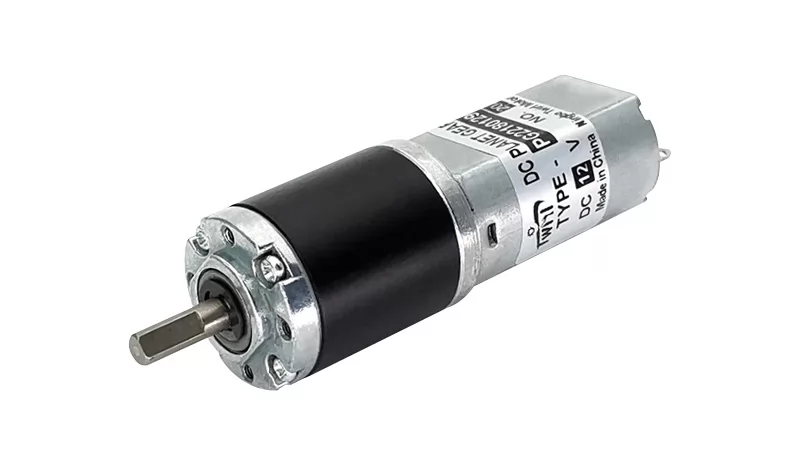 |
The PG22180 series is designed for compact automation applications where installation space is limited but reliable performance is non-negotiable. This series delivers stable torque output with quiet operation, making it well-suited for smart lockers, small vending mechanisms, door actuators, and dispensing systems.
|
PG25370 Series
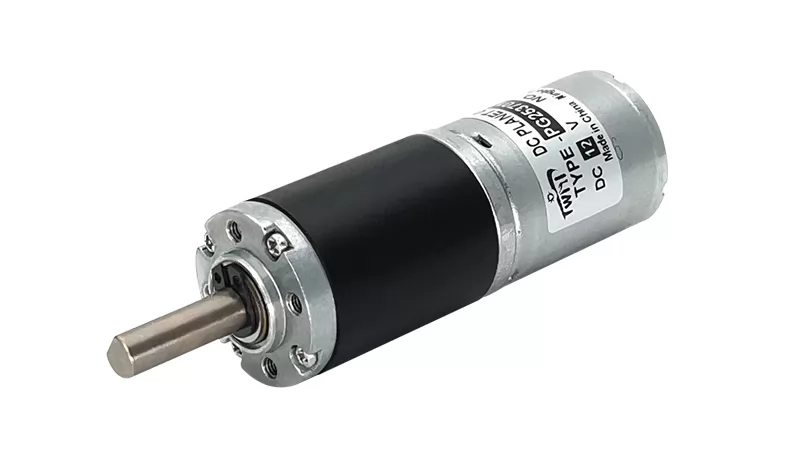 |
The PG25370 series is designed for higher-load applications that demand greater output torque and stronger load capability. This series is suitable for large vending machines, heavy locker doors, commercial food dispensers, and other automation equipment that handles substantial mechanical loads.
|
Why Automation Equipment Manufacturers Choose Toosyn
| Compact planetary gear motors designed for space-limited equipment |
|
Vending machines and smart lockers often have strict dimensional requirements. Toosyn's planetary gear motors provide high torque density, helping OEM engineers achieve reliable performance without increasing equipment size. The compact form factor fits into tight cabinet spaces, behind door panels, and within dispensing assemblies where larger motors simply cannot be installed. |
| Stable performance for high-frequency operation |
|
Automated equipment may perform thousands of cycles during its service life. Our gear motors are designed for consistent torque output, smooth transmission, and reliable operation under repeated movement conditions. The planetary gear train distributes load across multiple gears at each stage, reducing wear and maintaining performance over extended cycle counts. |
| Low-noise solutions for customer-facing environments |
|
Noise directly affects user experience in public environments. Precision gear manufacturing and optimized transmission design help reduce vibration and operating noise. For OEM gear motor supplier partnerships, this means end-users encounter quiet, professional operation from the equipment. |
| Custom shafts, gear ratios, and mounting solutions |
|
Standard motors do not always match every mechanical structure. We customize shaft dimensions, reduction ratios, mounting interfaces, and electrical specifications to simplify OEM integration. This reduces the need for adapters and modifications, shortening development time and lowering assembly costs. |
| Consistent production quality from prototype to mass production |
|
Automation equipment manufacturers require every unit to perform consistently. Controlled machining and assembly processes help maintain stable motor characteristics across production batches. Batch-to-batch consistency means that a motor sample approved during prototyping will perform identically in volume production, eliminating one of the most common sources of field failures. |
| Engineering support for complete actuator development |
|
Our engineers support customers from initial motor selection through production, evaluating load requirements, speed, duty cycle, installation space, and application conditions. This support helps OEM teams avoid common selection errors and accelerates the path from concept to production. |
Common Mistakes When Choosing a Vending Machine Motor
| Mistake 1 Choosing power without considering torque. Motor wattage alone does not indicate whether the motor can drive a specific load. A 10W motor with an efficient gearbox can deliver more usable torque at the output shaft than a 20W motor with a poor gear ratio. Always evaluate the output torque at the required speed, not the input power rating. |
| Mistake 2 Ignoring operating cycles. A motor that performs well in bench tests may overheat or wear prematurely when subjected to thousands of start-stop cycles in daily operation. Evaluating the duty cycle and thermal characteristics under realistic operating conditions prevents field failures. |
| Mistake 3 Selecting oversized motors. Oversizing increases cost, space requirements, and power consumption without improving reliability. A properly sized motor with appropriate torque margin operates more efficiently and fits within the available installation space. |
| Mistake 4 Focusing only on purchase price. A cheaper motor that fails prematurely or requires frequent replacement costs more over the equipment's service life. Total cost of ownership — including maintenance, downtime, and replacement — should guide the selection decision. |
| Mistake 5 Overlooking noise performance. In customer-facing environments, motor noise directly affects the perceived quality of the equipment. Testing noise levels under actual operating conditions, not just in an anechoic chamber, provides a realistic assessment. |
| Mistake 6 Using standard motors without customization. Off-the-shelf motors may not match the shaft dimensions, mounting interfaces, or electrical specifications required by a specific vending machine or locker design. Customization reduces assembly complexity and improves reliability by eliminating adapters and workarounds. |
Frequently Asked Questions
What motor is used in vending machines?
Vending machines typically use DC planetary gear motors for product dispensing, door actuation, and coil rotation. These motors provide the compact size, controlled torque, and quiet operation needed for retail environments. The specific motor type and size depend on the dispensing mechanism, product weight, and cycle frequency of the machine.
Why use a planetary gear motor for vending equipment?
Planetary gear motors deliver high torque density in a compact form factor, which is essential for space-constrained vending machines. They also provide smooth operation, good efficiency, and long service life under high-cycle conditions. The multiple-gear contact in a planetary system distributes load and reduces wear, making it well-suited for the frequent start-stop operation typical of vending equipment.
How do I choose a smart locker actuator motor?
Key factors include the door size and weight, available installation space, required opening speed, duty cycle, noise requirements, and voltage supply. Start by calculating the total load (door weight plus spring resistance plus friction), then select a motor that provides adequate torque with a 20–30% safety margin at the required operating speed. Compact planetary gear motors are commonly used due to their small diameter and high torque output.
What makes a gear motor suitable for high-cycle applications?
Gear motors for high-cycle applications need durable gear materials, precise tooth profiles, quality bearings, and effective lubrication. Planetary gearboxes are inherently suited for high-cycle use because the load is distributed across multiple planet gears at each stage, reducing stress on individual teeth. Thermal management is also important — motors that run cool under continuous operation last longer.
How can vending machine motor noise be reduced?
Noise can be reduced by selecting motors with precision-machined gears, using appropriate gear ratios to keep operating RPM low, choosing quality bearings, ensuring proper alignment during assembly, and adding vibration isolation between the motor and the equipment housing. Planetary gear motors with optimized gear tooth profiles typically produce less noise than spur gear alternatives.
What is the difference between PG22180 and PG25370?
The PG22180 series is designed for compact automation applications with moderate torque requirements, such as smart locker door actuators and small vending mechanisms. The PG25370 series provides higher output torque for larger loads, making it suitable for heavy locker doors, large vending machines, and commercial automation equipment that handles substantial mechanical loads.
Can planetary gear motors be customized for vending machines?
Yes. Planetary gear motors can be customized with different shaft dimensions, gear ratios, voltages, winding specifications, and mounting interfaces to match the requirements of specific vending machine or locker designs. Customization eliminates the need for mechanical adapters and ensures the motor integrates directly into the equipment's actuator mechanism.
|
Looking for a compact and reliable planetary gear motor for vending machines or smart lockers? Share your required torque, speed, installation space, voltage, and operating cycle. Our engineering team will recommend the most suitable PG22180 or PG25370 planetary gear motor solution for your application.
Email: sales@toosyn.com
View Toosyn Planetary Gear Motor Products → Partner with Toosyn for compact, quiet, and reliable motion solutions for vending machines and smart locker systems. |
0
Comments
Leave a Comment
Your email address will not be published. Required fields are marked *
Name can't be empty
Email error!
Message can't be empty
😍
😜
😳
😌
😄
😘
😝
😒
😃
😚
😚
😛
😟
😧
😀
😉
😓
😱
😤
😣
😂
😥
😩
😠
😢
😭
😰
😨
😡
😆
😪
😅
😐
😇
😋
😴
👿
😕
😏
😷
😵
😟
😮
😯
😑
👧
👴
😧
😬
😾
👶
👱
👵
👸
🙀
👺
👦
👩
👨
😽
😿
🙈
💩
💥
💤
😼
😹
🙉
🔥
✨
💦
👎
✌
👆
👈
💪
💹
👍
👊
💴
💶
💷
💸
👉
💵
🙏
🌎
🏧
👏
💳
👇
💑
🙆
🙅
💁
👫
👭
🙎
🙇
👑
👔
Submit Comment
Most Popular
-
 Aug 21, 2025Which Motor Is Best for Electric Vehicle? A Complete Guide for 2026
 -
 Oct 16, 2025Top 10 DC Motor Manufacturers in China 2026
 -
 Dec 18, 2025The Ultimate Buyer's Guide to High Torque DC Motors
 -
 Apr 11, 2026Top 10 China Gear Motor Manufacturer in 2026


Laster Blogs
-
 Aug 20, 2026Why Planetary Gear Motors Offer Low Backlash for Precision Positioning
 -
 Aug 19, 2026Planetary Gear Ratio Calculation: How to Calculate the Right Gear Ratio for Your Motor
 -
 Aug 18, 2026Planetary Gearbox vs Spur Gearbox: Why Planetary Wins in Compact High-Torque Applications
 -
 Aug 17, 2026What Is a Planetary DC Gear Motor and How Does It Work?


Set A Consultation Today
Name can't be empty
Email error!
Send Your Message
*We respect your confidentiality and all
information are protected.


