What Should You Look for in a Planetary Gear Motor for Camera Gimbal & Pan-Tilt Systems?
_1785891704_WNo_1600d900.webp)
Smooth camera movement depends on more than software algorithms. If the gear motor introduces backlash, vibration, inconsistent positioning, or unstable low-speed motion, image quality and tracking accuracy can quickly suffer. These issues become even more noticeable in high-resolution PTZ cameras, machine vision systems, and precision imaging equipment.
Whether you're developing a security camera, AI vision platform, drone gimbal, or pan-tilt mechanism, selecting the right gimbal motor directly affects positioning accuracy, motion smoothness, and long-term reliability.
This guide explains the key factors OEM manufacturers should evaluate when selecting a pan tilt gear motor, why planetary gear motors are widely used in precision positioning applications, and how Toosyn's PG16050 and PG22180 Encoder Series support accurate motion control.
Why Camera Gimbal Systems Fail to Deliver Smooth Motion
Most gimbal performance complaints trace back to the motor and gearbox, not the control algorithm. Common root causes include:
- Excessive backlash — the lens overshoots or fails to stop exactly where commanded.
- Low-speed instability — slow tracking movements become jerky instead of continuous.
- Encoder resolution too low — small positioning errors accumulate and reduce accuracy.
- Gearbox wear — vibration and play increase as the unit accumulates operating hours.
- Poor torque control — heavier lenses or camera modules can't be driven smoothly at all speeds.
- Mechanical vibration — undermines image stabilization and degrades footage quality.
Why Planetary Gear Motors Are Preferred for Pan-Tilt Systems
Planetary gear motors have become the standard choice for camera gimbals and pan-tilt mechanisms because of how the load is distributed through the gear train. Key advantages include:
- Higher torque density — more torque output relative to motor size.
- Compact footprint — fits inside space-constrained camera housings and gimbal arms.
- Lower backlash — tighter mesh tolerances support more repeatable positioning.
- Higher efficiency — multiple planet gears share the load, reducing losses.
- Better load distribution — reduces stress concentration on individual gear teeth.
- Longer lifespan — even wear across gear stages extends service life.
- Smoother motion — supports the stable low-speed movement pan-tilt tracking requires.
What Determines Positioning Accuracy?
Positioning accuracy is not the result of any single component — it's the combined outcome of several mechanical and electrical factors working together:
- Encoder — provides the feedback resolution the controller relies on.
- Backlash — determines how much play exists between direction changes.
- Gear precision — machining tolerances affect meshing consistency.
- Controller — how effectively the drive electronics use feedback data.
- Bearing quality — controls radial and axial play in the output shaft.
- Assembly consistency — unit-to-unit variation affects repeatability at scale.
A high-resolution encoder paired with a poorly assembled gearbox will still produce inaccurate motion — precision positioning depends on the whole system, not the encoder alone.
Why Encoder Feedback Matters
Encoder feedback is what turns an open-loop motor into a closed-loop positioning system. It allows the controller to continuously verify and correct:
- Position — confirming the output shaft reached the commanded angle.
- Velocity — enabling smooth acceleration and deceleration profiles.
- Closed-loop control — correcting drift in real time instead of relying on open-loop assumptions.
- Trajectory tracking — following a moving subject with continuous corrections.
- Repeatability — returning to the same position reliably across cycles.
- Tracking performance — reducing lag when following fast or erratic subject movement.
This is why Toosyn's PG16050 and PG22180 gear motors are offered in an Encoder Series — giving OEM integrators the closed-loop feedback needed for accurate, repeatable pan-tilt motion.
How to Balance Torque and Speed
Torque and speed requirements are dictated by the camera system itself, not by a generic motor spec sheet. Factors to weigh include:
- Camera and lens weight — determines the baseline torque needed to move the payload.
- Acceleration requirements — fast direction changes demand torque headroom, not just top speed.
- Tracking speed — how quickly the system must follow a moving subject.
- Payload distribution — off-center loads increase the torque needed to hold position.
- Gear ratio — the lever that trades speed for torque to match the application.
Rather than chasing a single torque or RPM number, the right motor is the one whose torque-speed curve matches how the camera actually moves in the field.
Why Low Backlash Is More Important Than High RPM
For most pan-tilt and gimbal applications, backlash has a bigger impact on perceived image quality than top speed does. Excess backlash shows up as:
- Image drift — the frame shifts slightly even when the motor has stopped commanding movement.
- Overshoot — the mechanism passes the target position before settling.
- Oscillation — the system hunts back and forth around the commanded position.
- Repeatability error — the same command produces slightly different end positions.
- Poor tracking — subtle instability accumulates during continuous subject tracking.
These effects are especially visible in zoom cameras, where even a fraction of a degree of backlash is magnified on-screen.
What OEM Engineers Should Confirm Before Choosing a Gimbal Motor
| Checklist Item | Why It Matters |
|---|---|
| Payload weight | Sets the minimum torque required to move and hold the camera/lens assembly. |
| Lens weight and center of gravity | Off-center loads increase holding torque and affect balance. |
| Rotation angle / range of motion | Determines mechanical stops and cable routing constraints. |
| Required speed | Impacts gear ratio selection and motor sizing. |
| Acceleration profile | Fast tracking needs torque headroom beyond steady-state requirements. |
| Encoder resolution | Directly affects positioning accuracy and repeatability. |
| Installation space | Constrains motor diameter, length, and mounting interface. |
| Gear ratio | Balances torque output against maximum speed. |
| Duty cycle | Continuous vs. intermittent operation affects thermal and wear design. |
| Supply voltage | Must match the platform's power architecture. |
Recommended Solution — PG16050 & PG22180 with Encoder
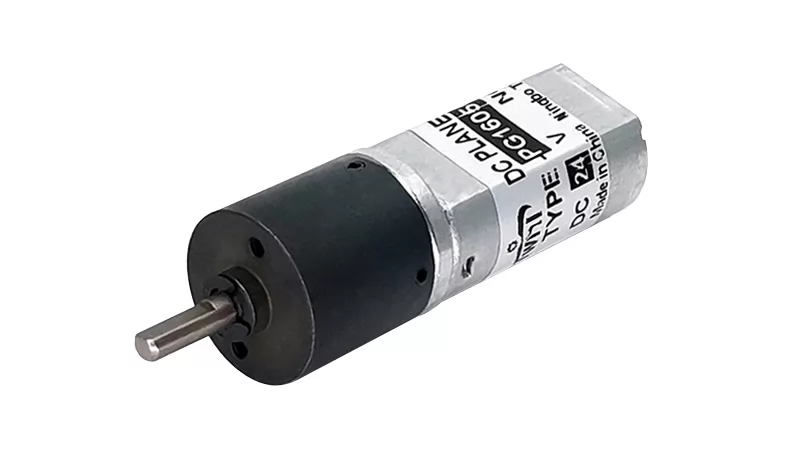 |
A compact planetary gear motor suited to space-constrained pan-tilt applications.
|
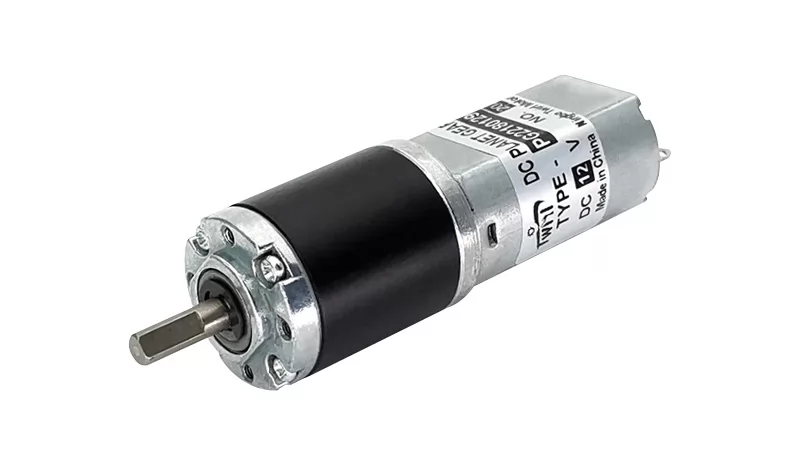 |
A higher-torque planetary gear motor built for heavier camera payloads and demanding duty cycles.
|
Both series combine planetary gearing, closed-loop encoder feedback, low backlash, and a compact footprint — delivering the high torque and smooth motion OEM camera platforms require.
Why Camera Equipment Manufacturers Choose Toosyn
|
Precision motion built for accurate positioning
In camera systems, even minor positioning errors can affect tracking performance and image stability. Our precision planetary gear motors are designed to support smoother motion, repeatable positioning, and stable low-speed operation for pan-tilt mechanisms. |
|
Integrated encoder options for closed-loop control
High-quality motion control depends on accurate feedback. Our encoder-equipped gear motors simplify integration with motion controllers, helping OEMs achieve more precise positioning and smoother camera movement. |
|
Compact designs without sacrificing torque
Camera housings and pan-tilt mechanisms often provide limited installation space. Our compact planetary gear motors deliver high torque density while keeping overall dimensions suitable for space-constrained applications. |
|
Consistent gearbox quality across every production batch
Precision imaging systems require consistent performance from every unit. Advanced CNC machining and controlled assembly processes help maintain stable torque, gearbox accuracy, and repeatable motion from prototypes to mass production. |
|
Custom configurations for OEM camera systems
Every camera platform has different mechanical requirements. We customize gear ratios, shaft dimensions, encoder options, voltages, and mounting interfaces to simplify integration into your pan-tilt system. |
|
Engineering support from concept to production
Selecting a precision positioning motor involves more than comparing torque and RPM. Our engineers evaluate payload, movement speed, installation constraints, positioning accuracy, and control requirements to recommend the most suitable solution. |
Common Mistakes When Choosing a Pan-Tilt Gear Motor
| MistakeChoosing speed over positioning accuracy — a fast motor with poor repeatability still produces unstable footage. |
| MistakeIgnoring backlash — even a small amount of play becomes visible once magnified through a zoom lens. |
| MistakeSelecting low-resolution encoders — insufficient feedback resolution limits how precisely the controller can correct position. |
| MistakeUsing oversized motors — excess size and weight add cost and strain on the gimbal structure without improving accuracy. |
| MistakeIgnoring gearbox lifespan — a motor that performs well when new but wears quickly increases long-term backlash and vibration. |
| MistakeNot considering payload changes — future lens or housing upgrades can push an undersized motor past its usable torque range. |
FAQ
What motor is used in camera gimbals?
Most camera gimbals and pan-tilt systems use small planetary gear motors, often paired with an encoder for closed-loop position feedback. Planetary gearing offers a good balance of torque, compact size, and low backlash for this application.
Why use a planetary gear motor for pan-tilt systems?
Planetary gear motors distribute load across multiple gears, which improves torque density, reduces backlash, and extends service life compared to simpler gear arrangements — all important for smooth, repeatable pan-tilt motion.
How much torque does a camera gimbal motor need?
Required torque depends on payload weight, center of gravity, and acceleration profile rather than a fixed number. Heavier lenses, off-center mounting, or fast tracking movements all increase the torque needed.
Why is encoder feedback important?
Encoder feedback enables closed-loop control, letting the system continuously verify and correct position, velocity, and trajectory instead of relying on open-loop assumptions. This improves accuracy, repeatability, and tracking performance.
What causes camera vibration?
Common causes include gearbox backlash, worn bearings, unstable low-speed motor control, and mechanical assembly tolerances — all of which can be reduced with a well-matched planetary gear motor and encoder.
How can backlash affect camera positioning?
Backlash allows play between direction changes, which can cause image drift, overshoot, and oscillation around the target position — effects that become more visible at higher zoom levels.
Which is better for PTZ cameras: PG16050 or PG22180?
The PG16050 suits compact, lightweight camera and drone gimbal applications, while the PG22180 is built for heavier payloads such as industrial vision and security camera systems. The right choice depends on payload weight and torque requirements.
Can Toosyn customize gimbal motors?
Yes. Gear ratios, shaft dimensions, encoder options, voltages, and mounting interfaces can be customized to fit a specific OEM camera or pan-tilt platform.
|
Looking for a precision planetary gear motor for your camera gimbal or pan-tilt system? Share your payload, required rotation speed, positioning accuracy, installation space, and encoder requirements. Our engineering team will recommend the most suitable PG16050 or PG22180 Encoder Series for your OEM application.
Email: sales@toosyn.com
Partner with Toosyn for precision planetary gear motors and reliable motion solutions. |
0
Comments
Leave a Comment
Your email address will not be published. Required fields are marked *
Name can't be empty
Email error!
Message can't be empty
😍
😜
😳
😌
😄
😘
😝
😒
😃
😚
😚
😛
😟
😧
😀
😉
😓
😱
😤
😣
😂
😥
😩
😠
😢
😭
😰
😨
😡
😆
😪
😅
😐
😇
😋
😴
👿
😕
😏
😷
😵
😟
😮
😯
😑
👧
👴
😧
😬
😾
👶
👱
👵
👸
🙀
👺
👦
👩
👨
😽
😿
🙈
💩
💥
💤
😼
😹
🙉
🔥
✨
💦
👎
✌
👆
👈
💪
💹
👍
👊
💴
💶
💷
💸
👉
💵
🙏
🌎
🏧
👏
💳
👇
💑
🙆
🙅
💁
👫
👭
🙎
🙇
👑
👔
Submit Comment
Most Popular
-
 Aug 21, 2025Which Motor Is Best for Electric Vehicle? A Complete Guide for 2026
 -
 Oct 16, 2025Top 10 DC Motor Manufacturers in China 2026
 -
 Dec 18, 2025The Ultimate Buyer's Guide to High Torque DC Motors
 -
 Apr 11, 2026Top 10 China Gear Motor Manufacturer in 2026


Laster Blogs
-
 Aug 20, 2026Why Planetary Gear Motors Offer Low Backlash for Precision Positioning
 -
 Aug 19, 2026Planetary Gear Ratio Calculation: How to Calculate the Right Gear Ratio for Your Motor
 -
 Aug 18, 2026Planetary Gearbox vs Spur Gearbox: Why Planetary Wins in Compact High-Torque Applications
 -
 Aug 17, 2026What Is a Planetary DC Gear Motor and How Does It Work?


Set A Consultation Today
Name can't be empty
Email error!
Send Your Message
*We respect your confidentiality and all
information are protected.


