How to Choose a Planetary Gear Motor for Smart Valve and HVAC Actuators
Aug 14, 2026
Toosyn
_1786701022_WNo_1600d900.webp)
The performance of modern building automation and fluid control systems relies heavily on the components hidden inside their actuators. Selecting the right valve actuator motor is not simply a matter of picking a motor that fits; it is a complex engineering challenge. The motor and gearbox must translate specific valve loads into precise output torque, while simultaneously managing operating speed, positioning requirements, and physical installation space. Whether an OEM is designing a compact smart valve gear motor for zone control or a robust HVAC actuator motor for a chilled water system, the matching of motor specifications to the actuator's mechanical characteristics directly impacts reliability, duty cycle, and energy consumption. This guide explores the key parameters and selection criteria engineers must evaluate when developing motorized valve and damper systems.
How Does a Motorized Valve Actuator Work?
A motorized valve actuator converts electrical energy into mechanical motion to open, close, or modulate a valve. Understanding the power transmission path is essential for proper motor selection.
Motor
The system begins with an electric motor—typically a brushed or brushless DC motor. The motor generates high rotational speed (RPM) at a relatively low initial torque. On its own, this raw motor torque is rarely sufficient to overcome the static friction and fluid pressure acting against a valve stem.
Planetary Gearbox
To convert the motor's high speed into usable force, the power is routed through a gearbox. A planetary gearbox is frequently used because it offers high torque density in a compact, co-axial footprint. The gearbox reduces the motor's output speed while proportionally increasing the torque delivered to the output shaft.
Output Shaft
The output shaft of the gearbox connects to the valve drive mechanism. In a quarter-turn actuator, this shaft rotates 90 degrees to operate ball or butterfly valves. In a multi-turn actuator, it rotates continuously to raise or lower a gate or globe valve stem. The distinction between motor torque and output torque is critical here: output torque is the actual force applied to the valve, determined by the motor torque multiplied by the gear ratio and mechanical efficiency.
Valve Mechanism
As the output shaft turns, it engages the valve mechanism, physically moving the valve disc or plug to control fluid flow. In a smart valve actuator, an encoder provides position feedback, ensuring the valve reaches the exact required position and allows the system to respond dynamically to building automation commands.
Where Are Gear Motors Used in Smart Valve and HVAC Systems?
Gear motors are deployed across a wide range of HVAC and smart flow control applications. The specific mechanical requirements vary depending on the system's function.
HVAC Water Valve Actuators
Used in hydronic heating and cooling systems, these actuators control the flow of chilled or hot water. They require high breakaway torque to overcome initial valve friction and must maintain their position against fluid pressure. A reliable HVAC actuator motor ensures precise temperature modulation.
Zone Valve Actuators
Found in residential and light commercial zoning systems, these actuators are highly space-constrained. The smart valve gear motor used here must be exceptionally compact, quiet, and capable of intermittent duty, often utilizing spring-return mechanisms for fail-safe operation.
Air Damper Actuators
Used in air handling systems and ventilation ducts, damper actuators modulate airflow. While they generally require less torque than water valves, they must handle long operating strokes and frequent cycling, making motor durability and thermal management a priority.
Building Automation
In centralized building automation systems, actuators must support advanced communication protocols. The motors used must respond accurately to analog or digital control signals, requiring consistent speed and predictable positioning.
Smart Flow Control
Industrial and commercial smart flow control systems demand closed-loop precision. These actuators rely on integrated encoders to verify position in real-time, adjusting flow rates dynamically based on sensor data.
Key Factors When Choosing a Planetary Gear Motor
Selecting the correct valve actuator gear motor requires evaluating multiple engineering parameters. Overlooking any of these can lead to premature failure or inaccurate flow control.
1. Required Valve Torque
Torque is the primary selection criterion. Engineers must calculate the required torque to overcome the valve's breakaway friction, dynamic flow forces, and seating torque. A general engineering framework is:
Required Torque ≈ Valve Load (Friction + Pressure Differential) × Mechanical Leverage × Safety Margin
However, there is no universal safety factor. The actual safety margin depends heavily on valve design, fluid temperature, seal aging, and operating conditions. Manufacturers typically map actuator torque ratings directly to specific valve sizes.
2. Output Speed and Opening/Closing Time
The output speed (RPM) of the gearbox determines how quickly the valve opens or closes. A lower gear ratio provides faster operation but less torque, while a higher ratio provides more torque but slower operation. In HVAC systems, opening and closing times are critical for system response, often dictating the acceptable gear motor actuation method.
3. Gear Ratio
The gear ratio defines the relationship between motor speed and output speed. Higher reduction ratios significantly increase available output torque but reduce RPM. Engineers must balance this trade-off, deciding between single-stage planetary gears for moderate reduction and multi-stage configurations for high-torque, low-speed applications.
4. Position Feedback and Encoder
A smart valve actuator differentiates itself through closed-loop positioning. Integrating a magnetic encoder for position feedback allows the system to track the exact rotational angle of the output shaft. This ensures precise modulation, prevents over-travel, and enables diagnostic feedback.
5. Duty Cycle and Operating Life
Actuators are rarely run continuously. The motor must be rated for the application's specific duty cycle—whether intermittent (zone valves) or continuous modulation (commercial HVAC dampers). Frequent cycling builds thermal load and accelerates brush wear in DC motors, making gearbox durability and motor insulation critical factors.
6. Size and Installation Space
Actuator housings are strictly limited by the physical dimensions of the valve and the surrounding pipework. Motor diameter, overall length, mounting flange style, and output shaft configuration must align with the mechanical envelope. Compact planetary designs are favored for their high torque-to-size ratio.
7. Backlash, Noise and Motion Stability
In modulating applications, gear backlash can cause positioning inaccuracy and hunting. Low-backlash planetary gearing improves motion stability. Additionally, motor noise is a significant concern in occupied building spaces, requiring gears machined for low acoustic emission.
Planetary Gear Motor vs Other Motor Solutions
While planetary gear motors are highly effective, they are not the only solution. Engineers should objectively compare available technologies:
| Motor Solution | Typical Strength | Possible Limitation |
|---|---|---|
| DC Gear Motor (Spur/Worm) | Simple control, low cost | Lower torque density, brush wear, potential noise |
| Planetary DC Gear Motor | High torque density, compact size, co-axial output | Requires appropriate duty cycle management |
| BLDC Gear Motor | Long service life, electronic commutation, high efficiency | Higher control complexity and component cost |
| Stepper Motor | Excellent open-loop positioning capability | Can consume holding current, limited high-speed torque |
| Servo System | Advanced closed-loop control, extreme precision | Higher system complexity, overkill for standard valves |
A planetary DC gear motor is the right choice when an application demands a high torque output within a strict space envelope, where standard modulating control is sufficient, and cost-effectiveness is a priority alongside reliability.
How to Calculate the Motor and Gearbox Requirements
To properly size a valve actuator motor, engineers should follow a structured calculation framework:
- Step 1: Determine valve operating torque. Consult valve manufacturer specs for breakaway and running torque.
- Step 2: Determine required opening/closing time. Establish the maximum allowable travel time (e.g., 10 seconds for 90 degrees).
- Step 3: Calculate required output speed. Convert travel time to output RPM (e.g., 90° in 10s = 15 RPM).
- Step 4: Select gear ratio. Divide the motor's rated speed by the required output RPM to find the target gear ratio.
- Step 5: Check motor operating point. Ensure the motor provides sufficient torque at the calculated speed, factoring in gearbox efficiency.
- Step 6: Check duty cycle. Verify that the motor's thermal profile can handle the expected cycle frequency.
- Step 7: Determine encoder/feedback requirements. Decide if closed-loop positioning is necessary for the application.
- Step 8: Validate prototype. The final selection must be physically tested against actual valve friction, operating temperature, travel limits, and mechanical constraints.
Recommended Planetary Gear Motors for Smart Valve Actuators
Toosyn provides a range of planetary DC gear motor solutions suitable for smart valve and HVAC actuator development. Engineers can evaluate these series based on specific application loads and space constraints.
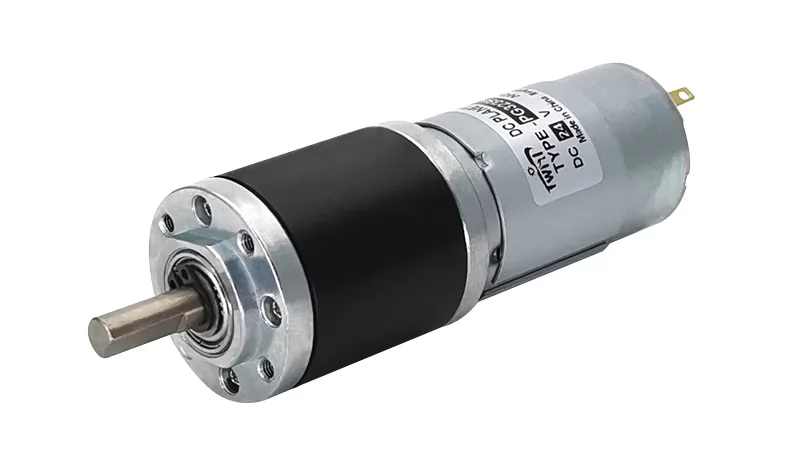 |
Diameter: 32 mm | Power: 3–11 W | Voltage: 12/24 VDC
This PG32395 planetary gear motor is well-suited for mid-torque valve actuators. It offers a compact design, low running noise, and customized speed and torque configurations, making it ideal for standard zone valves and small dampers. |
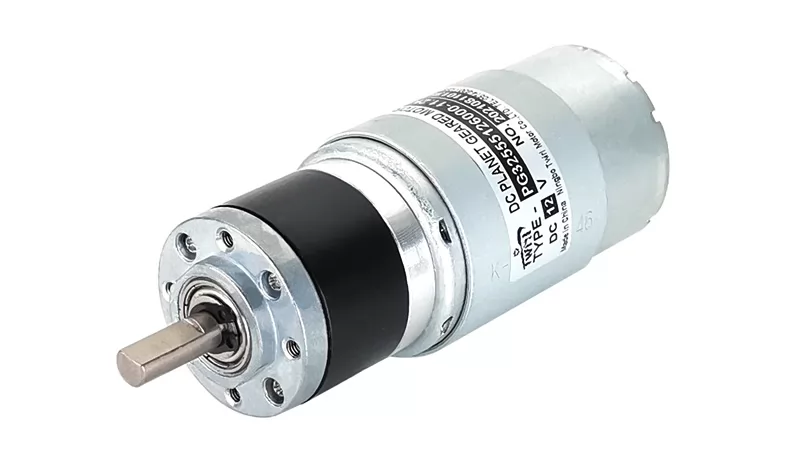 |
Diameter: 32 mm | Power: 4–20 W | Voltage: 12/24 VDC
The PG32555 planetary gear motor provides higher power output within the same 32mm envelope. With wide gear ratio options and simple mounting, it is recommended for higher-demand smart valve actuators requiring faster response times. |
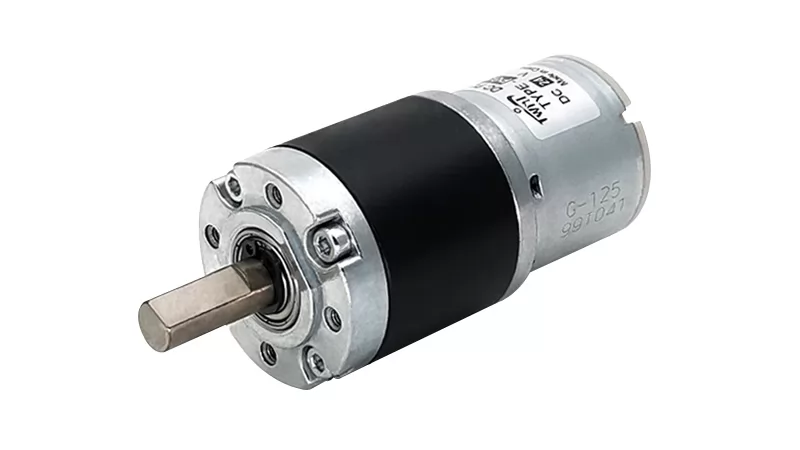 |
Diameter: 36 mm | Power: 1–8 W | Voltage: 12/24 VDC
The PG36GR planetary gear motor is optimized for applications requiring a highly customizable ratio and specific mounting/shaft accessories. It is a strong candidate for compact actuator designs with unique mechanical interface requirements. |
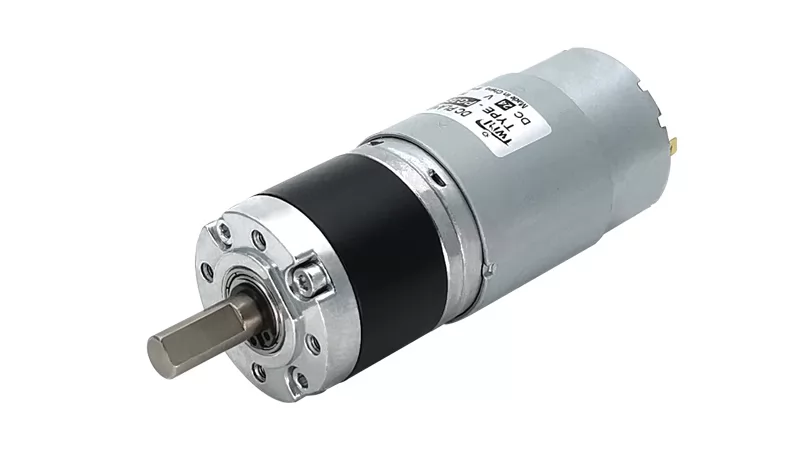 |
Diameter: 36 mm | Power: 4–20 W | Voltage: 12/24 VDC
Designed for higher-torque valve applications, the PG36555 series offers a rated torque range of 20–100 kg.cm. It features multiple ratios and a low backlash option, making it suitable for commercial HVAC water valves that require significant breakaway torque. |
| Series | Diameter | Power | Position Feedback | Suggested Role |
|---|---|---|---|---|
| PG32395 | 32 mm | 3–11 W | Optional/custom | Mid-torque valve actuator |
| PG32555 | 32 mm | 4–20 W | Optional/custom | Higher-demand actuator |
| PG36GR | 36 mm | 1–8 W | Custom | Compact actuator |
| PG36555 | 36 mm | 4–20 W | Optional | Higher-torque valve applications |
Why Choose Toosyn for Custom Valve Actuator Motors?
Toosyn serves as an engineering and manufacturing partner for OEMs developing motorized valve and HVAC actuator systems. Rather than offering standard off-the-shelf components, Toosyn focuses on application-specific motor and gearbox matching.
|
Custom Gear Ratios Matching the exact speed and torque requirements of specific valve designs to optimize performance. |
|
Custom Output Shafts Designing specific shaft geometries, diameters, and D-cuts to interface seamlessly with OEM valve stems. |
|
Mounting Configurations Providing custom flange designs and mounting patterns to fit within unique actuator housings. |
|
Encoder Integration Seamlessly integrating magnetic encoders to enable closed-loop smart valve control and position feedback. |
|
Application-Specific Matching Evaluating duty cycle, thermal load, and torque demands to ensure the motor architecture aligns with the actuator's life expectancy. |
FAQ
What motor is used in a valve actuator?
Valve actuators typically use brushed or brushless DC motors paired with a gearbox. In smart valve applications, stepper motors or servo systems are also used. The choice depends on the required torque, control precision, and cost constraints.
How do I choose a motor for a valve actuator?
You must evaluate the valve's required breakaway torque, the necessary opening/closing time, and the physical space available. Calculate the required output speed, select an appropriate gear ratio, and ensure the motor's torque-speed curve and duty cycle meet the application's demands.
How much torque does a valve actuator motor need?
Torque requirements depend entirely on the valve type, size, internal friction, pressure differential, and mechanical design. There is no universal value. Engineers must consult the valve manufacturer's specifications and apply an appropriate safety margin based on operating conditions.
Why use a planetary gear motor for a valve actuator?
Planetary gear motors offer high torque density in a compact, co-axial package. They are ideal for actuator housings where space is limited but high breakaway torque is required. They also provide smooth motion and can be configured for low backlash, improving positioning accuracy.
Can planetary gear motors be customized for HVAC valve actuators?
Yes. Manufacturers like Toosyn can customize gear ratios, output shaft dimensions, mounting flanges, and integrate encoders. This ensures the motor perfectly matches the specific torque, speed, and feedback requirements of the HVAC actuator system.
|
Looking for a reliable planetary gear motor for smart valve or HVAC actuator systems? Share your required torque, output speed, operating voltage, installation space, duty cycle, and position feedback requirements — Toosyn’s engineering team will recommend or customize the right gear motor solution for your application.
Email: sales@toosyn.com
Phone: +86-574-8301 1768 Partner with Toosyn for precise, low-noise, and reliable planetary gear motors engineered for smart valve actuators, HVAC dampers, and automated flow control systems. |
0
Comments
Leave a Comment
Your email address will not be published. Required fields are marked *
Name can't be empty
Email error!
Message can't be empty
😍
😜
😳
😌
😄
😘
😝
😒
😃
😚
😚
😛
😟
😧
😀
😉
😓
😱
😤
😣
😂
😥
😩
😠
😢
😭
😰
😨
😡
😆
😪
😅
😐
😇
😋
😴
👿
😕
😏
😷
😵
😟
😮
😯
😑
👧
👴
😧
😬
😾
👶
👱
👵
👸
🙀
👺
👦
👩
👨
😽
😿
🙈
💩
💥
💤
😼
😹
🙉
🔥
✨
💦
👎
✌
👆
👈
💪
💹
👍
👊
💴
💶
💷
💸
👉
💵
🙏
🌎
🏧
👏
💳
👇
💑
🙆
🙅
💁
👫
👭
🙎
🙇
👑
👔
Submit Comment
Most Popular
-
 Aug 21, 2025Which Motor Is Best for Electric Vehicle? A Complete Guide for 2026
 -
 Oct 16, 2025Top 10 DC Motor Manufacturers in China 2026
 -
 Dec 18, 2025The Ultimate Buyer's Guide to High Torque DC Motors
 -
 Apr 11, 2026Top 10 China Gear Motor Manufacturer in 2026


Laster Blogs
-
 Aug 20, 2026Why Planetary Gear Motors Offer Low Backlash for Precision Positioning
 -
 Aug 19, 2026Planetary Gear Ratio Calculation: How to Calculate the Right Gear Ratio for Your Motor
 -
 Aug 18, 2026Planetary Gearbox vs Spur Gearbox: Why Planetary Wins in Compact High-Torque Applications
 -
 Aug 17, 2026What Is a Planetary DC Gear Motor and How Does It Work?


Set A Consultation Today
Name can't be empty
Email error!
Send Your Message
*We respect your confidentiality and all
information are protected.


